Not all Kauai snorkeling tours put you in the same water. Where the boat departs from, how many people are on board, and who’s actually guiding you through the reef: all of that shapes what you experience.
This page covers what to ask before you book and how Makana Charters approaches each of those factors.
Where to Snorkel on Kauai
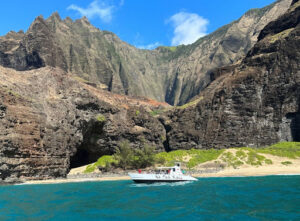
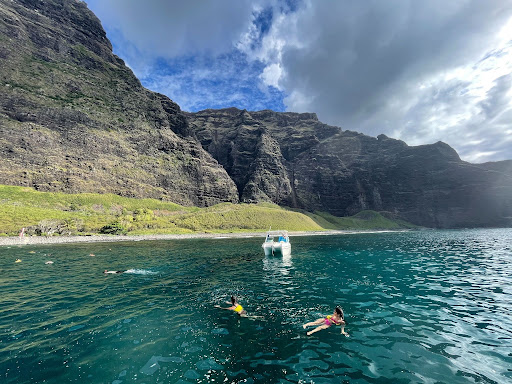
The snorkel sites we visit depend on ocean conditions on the day of your tour. We access Makole, Ke’e Beach (also called Tunnels), and Nualolo Kai most often, all along the north and northwest shore of Kauai, in marine habitat that south-shore snorkel spots don’t reach.
Na Pali Coast reef systems, particularly Nualolo Kai, see a fraction of the daily boat traffic that south-shore locations handle. That lower pressure shows in the water, and it’s a big part of why we run out here instead.
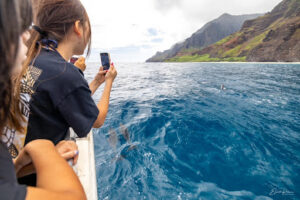
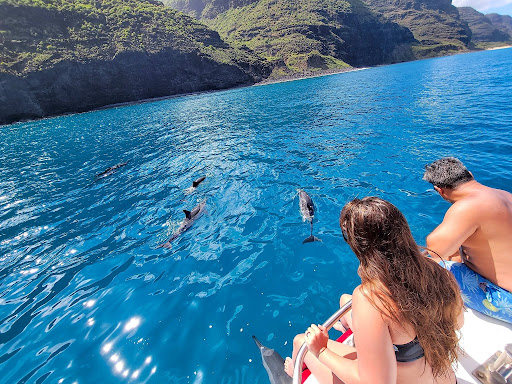
Spinner dolphins and Pacific Bottlenose dolphins are commonly spotted along the Na Pali Coast on our tours, and it’s rare that we don’t see them on a run. Honu (Hawaiian green sea turtles) are frequently seen near the reef, and reef fish and coral formations are a consistent part of the snorkel stop.
Wildlife sightings are never guaranteed, as ocean conditions and animal behavior vary, but our crew knows the habitats and tides that put guests in the right place.
What to Look For in a Kauai Snorkeling Tour
Departure Point
Departure points can change everything about how much time you actually spend at the reef. We depart from Kikiaola Small Boat Harbor in Kekaha, the closest departure point to the Na Pali Coast on Kauai. That means up to an hour more on the coast compared to tours leaving from Port Allen, which sits farther south.
When you’re comparing operators, ask where they depart from and how long it takes to reach the snorkel site. That single detail shapes the whole day.
Group Size
Our tours carry 12 to 36 guests, depending on the boat, smaller than most operators on the island. At a crowded snorkel stop, more people in the water means more surface disruption and less time near the reef. Smaller groups enter faster and stay longer without the coordination overhead that comes with larger headcounts.
Group size also affects how well the crew can watch guests in the water. On a 32-guest boat, every guest gets attention. Larger boats change that ratio.
Gear and Instruction
Snorkel gear and flotation devices are included on every Makana tour, so you don’t need to bring your own or rent separately. Before the snorkel stop, the crew walks guests through proper gear fit and technique.
If you’d rather stay on board and watch from the deck, that’s fine: the boat stays anchored at the snorkel site for about one hour.
Poorly fitted gear leads to leaking masks and shortened time in the water. Our crew checks fit before anyone enters.
Crew Knowledge
Our captains and crew have lived on Kauai for years, most of their entire lives. They know which conditions favor Nualolo Kai over Makole, and when ocean swells make a different location the better call.
Crew who grew up here notice things seasonal hires don’t: a turtle resting on a particular coral head, a school of fish holding at depth before surfacing, a current shift that signals when to wrap the snorkel stop.
Cultural Context
Makana (the Hawaiian word for gift) is a name our family chose deliberately. Our family’s connection to the Na Pali Coast extends over 200 years, documented through generations of navigation on these same waters.
The cultural narration guests hear on our tours comes from Native Hawaiian guides whose family is part of this coast’s history.
Snorkeling at Nualolo Kai carries a different weight when the person in the water next to you grew up hearing stories about this specific place.
What’s Included on a Makana Snorkeling Tour
Every tour includes snorkel gear, flotation devices, a deli-style lunch, soft drinks, and local juices. Deli lunch options are turkey, ham, roast beef, or vegetarian, served with fruit and snacks.
The snorkel stop runs about one hour. During that time, you’re free to snorkel, float with flotation devices, or stay on board. There’s no pressure to get in the water.
Snorkeling tours run on the Na Pali Kai III, our 32-guest catamaran departing from Kikiaola Harbor. The Na Pali Kai III has a 360-degree walk-around deck, which gives you room to move as the scenery changes. The minimum age is 4 years old.
If you’d prefer a smaller group, our Seiko 1, Seiko 2, and Leialoha catamarans also depart from Kikiaola Harbor. Those boats carry 16 to 18 guests with a minimum age of 9.
How to Book a Kauai Snorkeling Tour
We depart from Kikiaola Small Boat Harbor in Kekaha, HI. You don’t check in at Port Allen. All boats except the Amelia K leave from Kikiaola, so plan your drive accordingly.
Call (808) 338-9980 to confirm current availability and any seasonal adjustments before booking.
Frequently Asked Questions About Kauai Snorkeling Tours
Do I need to know how to swim to join a Kauai snorkeling tour?
No. Flotation devices are included and available for all guests. You don’t need to be a confident swimmer to participate, and if you’d rather stay on board during the snorkel stop, that’s fine: the crew doesn’t require anyone to enter the water.
Is a Kauai snorkeling tour a good activity for kids?
Yes. The Na Pali Kai III accepts guests ages 4 and older. Flotation devices are provided, and the crew is experienced with guests of all ages in the water. Kids who aren’t yet comfortable in the ocean stay on the boat during the snorkel stop. Families with children as young as 4 book this tour regularly.
Where exactly does the snorkeling take place?
The snorkel site varies by ocean conditions on the day of your tour. We most often stop at Makole, Ke’e Beach (Tunnels), or Nualolo Kai, all along the Na Pali Coast. Nualolo Kai sees far less boat traffic than south-shore locations. Our crew picks the site based on conditions that morning.
What if my snorkel gear doesn’t fit properly once we’re out on the water?
Tell the crew immediately. We carry backup gear on board and can swap out a mask or snorkel that isn’t sealing right. The crew checks fit before anyone enters the water, specifically to catch this early, but issues do come up. A leaking mask doesn’t fix itself mid-snorkel.