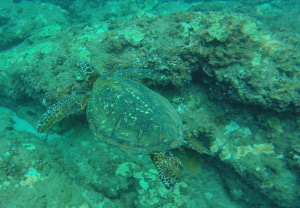
A Na Pali Coast snorkel tour puts you in a reef habitat for about an hour, and the gear you use during that hour affects how much of it you see. We provide snorkel gear and flotation devices for every guest, so the real question isn’t what to rent. It’s how a mask should fit, why reef-safe sunscreen matters near coral, and how to keep a phone or camera dry on a moving boat.
This piece goes into the mechanics of all three.
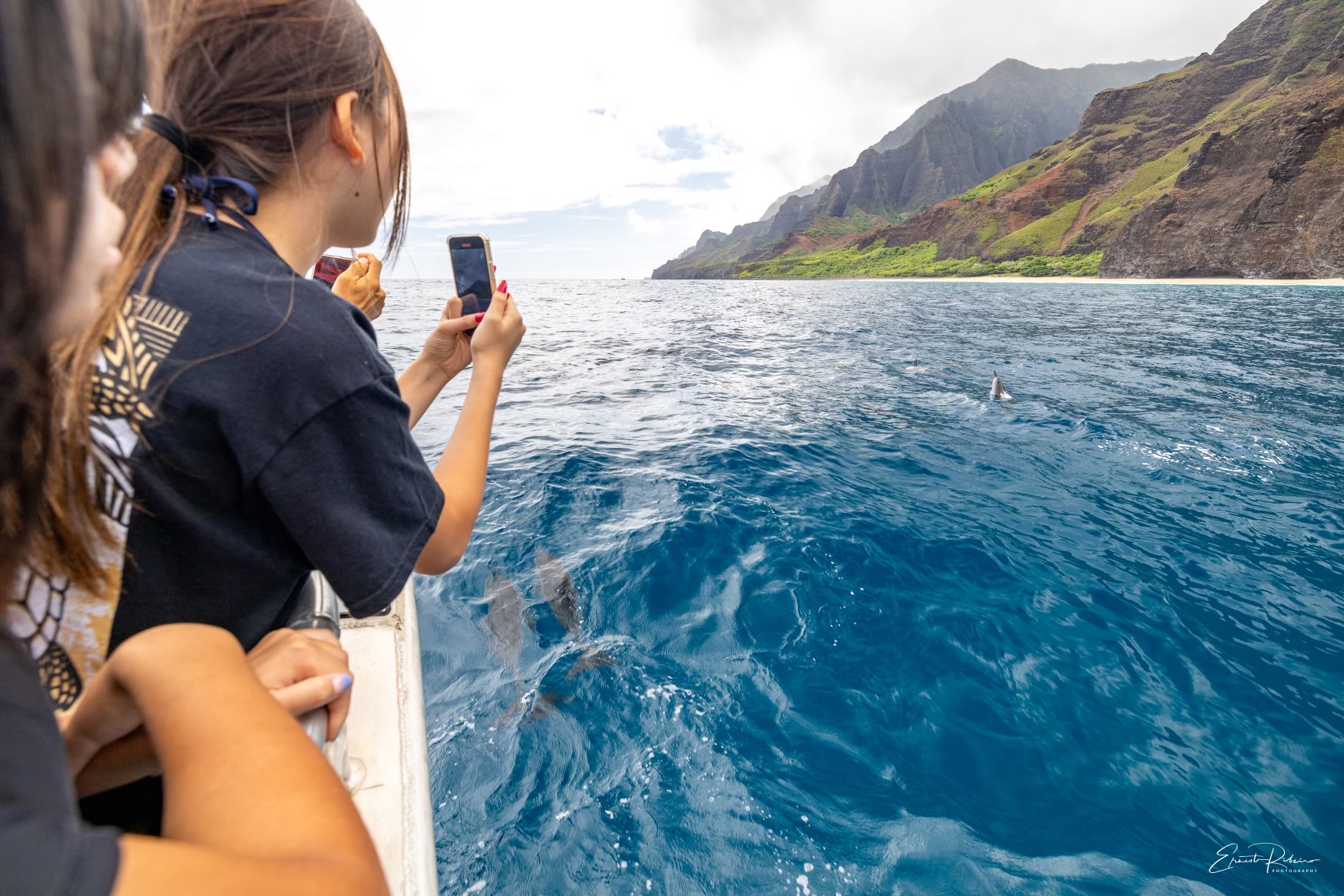
Does Every Na Pali Coast Tour Include Snorkel Gear?
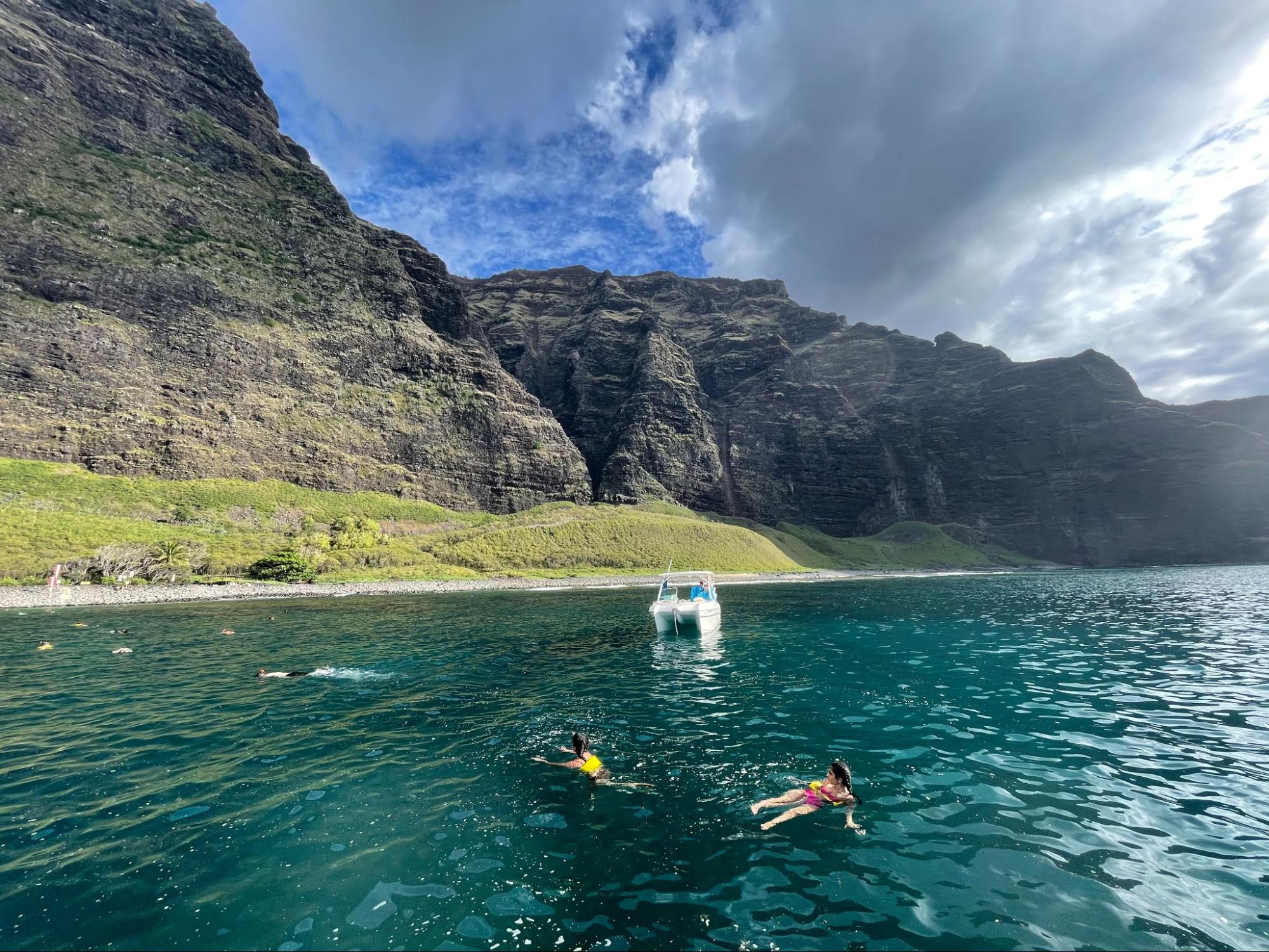
Yes. Every guest on our Na Pali Coast tours gets a mask, snorkel, fins, and a flotation device before the snorkel stop, so there’s no need to rent gear on the island beforehand. The gear comes out once we anchor at the snorkel site, which varies by conditions among Makole, Ke’e Beach (Tunnels), and Nualolo Kai.
If you’d rather use your own mask or fins, bring them. Guests with prescription lenses or a mask that already fits their face well are welcome to bring their own gear instead of using ours.
Getting a Snorkel Mask That Seals
A snorkel mask works by trapping a pocket of air against your face with a silicone or rubber skirt. If that skirt doesn’t sit flush against the skin, water leaks in around the edge, no matter how tight you pull the strap.
Test the seal before you get in the water: hold the mask to your face without the strap and inhale gently through your nose. If suction holds it in place on its own, the seal works. If it falls away, try a different size or reposition it lower on your nose bridge.
Hair caught under the skirt, whether from a hairline or a mustache, is the most common reason a mask leaks, so tuck loose strands away before you test it.
Once the seal holds, the strap only needs to keep the mask from shifting, not to force a fit. An over-tightened strap distorts the skirt and creates the leak it’s meant to prevent.
Why Fin Fit Changes How Much of the Snorkel Stop You See
Fins convert leg movement into a forward push more efficiently than bare feet, which matters most in the roughly one hour you have at the snorkel stop. A fin that fits well lets you cover the site with your legs instead of tiring your arms, and it gives you more control when a mild current runs through a site like Ke’e Beach.
A fin that’s too loose slips with every kick and wastes energy; one that’s too tight cramps your foot before the hour is up. If the pair you’re handed feels off in either direction, tell the crew before you get in the water so they can swap it.
Fin sizing works on the same logic as shoe sizing, and a snug fit matters most at the heel, not through the toes. A little extra room at the toes doesn’t slow you down. A loose heel does, since that’s the point where the fin pivots on each kick, and a slipping heel wastes the push instead of converting it into speed.
The current at a site like Ke’e Beach makes fit matter even more. A well-fitted fin turns each kick into forward progress against that pull; a loose one just churns water without moving you much, so the effort you’re putting in isn’t translating into distance covered.
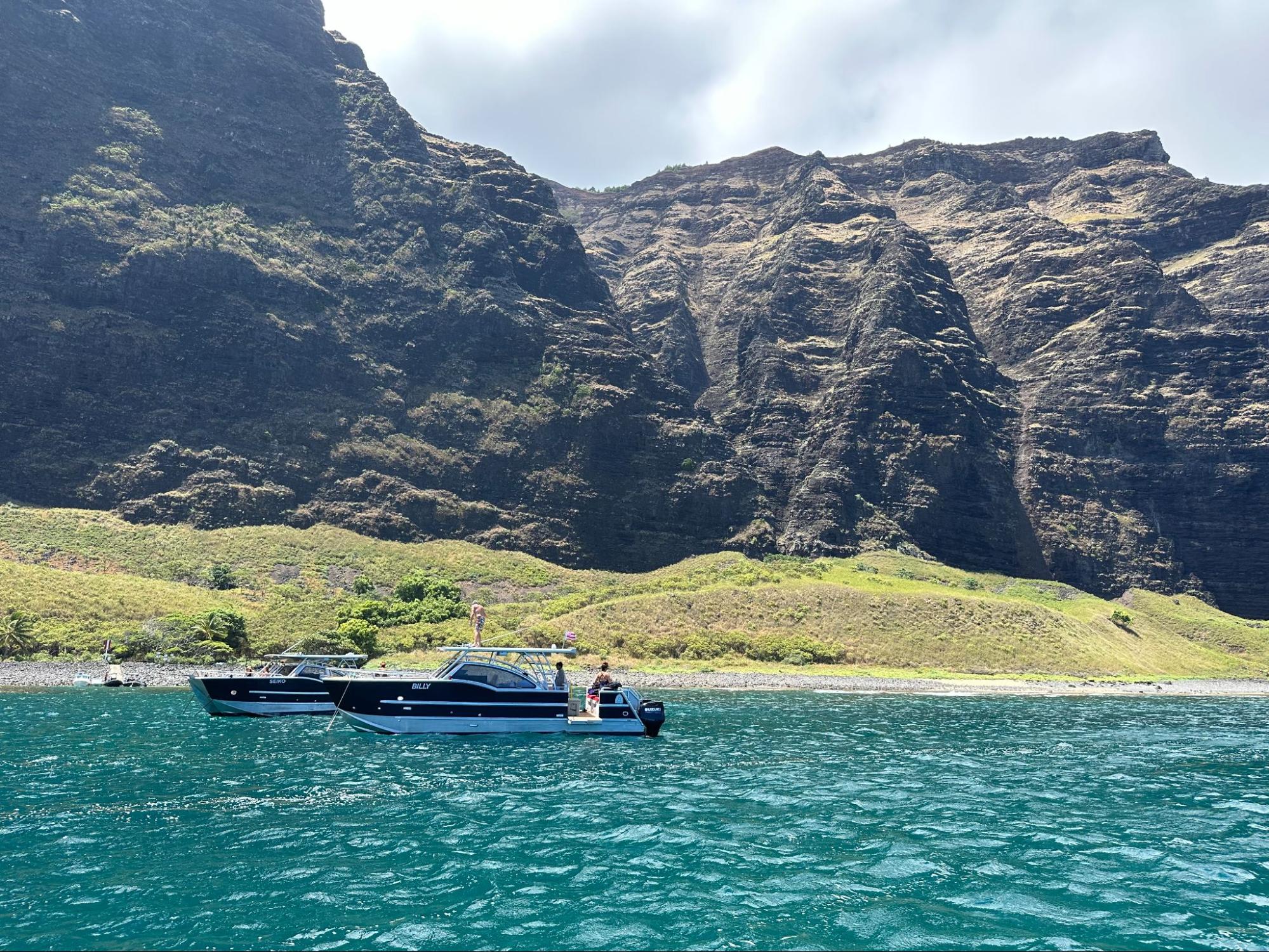
Flotation Devices: Who Needs One and Why We Provide Them for Everyone
We provide a flotation device for every guest at the snorkel stop, not only guests who ask for one. The mechanism is simple: it keeps you at the surface without effort, so your attention stays on what’s below you instead of on staying afloat.
That matters even for strong swimmers. An hour of face-down snorkeling uses different muscles than regular swimming, and reef sites can have a mild current depending on the day’s conditions. Wearing the device we provide costs you nothing in visibility and removes the fatigue variable.
It matters more for guests who aren’t confident swimmers. A flotation device doesn’t require any particular swimming ability to use correctly, so guests who’d rather not tread water for an hour can still get in and see the reef without that being a factor. The crew fits each guest before the snorkel stop, checking that the straps sit correctly rather than handing one over and letting you sort it out yourself.
Younger guests get the same treatment. A properly fitted flotation device is part of what makes the snorkel stop workable for them in the first place, not an optional extra. Fit still matters here: a device that’s too loose rides up and stops doing its job, so the crew checks this for every guest, regardless of age or swimming ability, before anyone gets in the water.
What “Reef-Safe” Sunscreen Means
“Reef-safe” refers to how a sunscreen behaves once it washes off your skin, which happens constantly during an hour in the water. Chemical filters like oxybenzone and octinoxate dissolve into the water column and have been linked to coral stress and bleaching in the areas where they concentrate.
Mineral filters, typically zinc oxide or titanium dioxide, work differently. They sit on top of the skin as a physical barrier that reflects UV rather than absorbing it, and they don’t dissolve into the water the way chemical filters do. Checking a sunscreen’s active ingredients for zinc oxide or titanium dioxide, rather than trusting a “reef-safe” label alone, is the more reliable way to confirm it.
The snorkel stop sits right above the reef, whether that’s Makole, Ke’e Beach, or Nualolo Kai on a given day, so this isn’t a minor detail. Apply reef-safe sunscreen before you board, and plan to reapply once during the tour since sun exposure on open water runs stronger than it feels on shore.
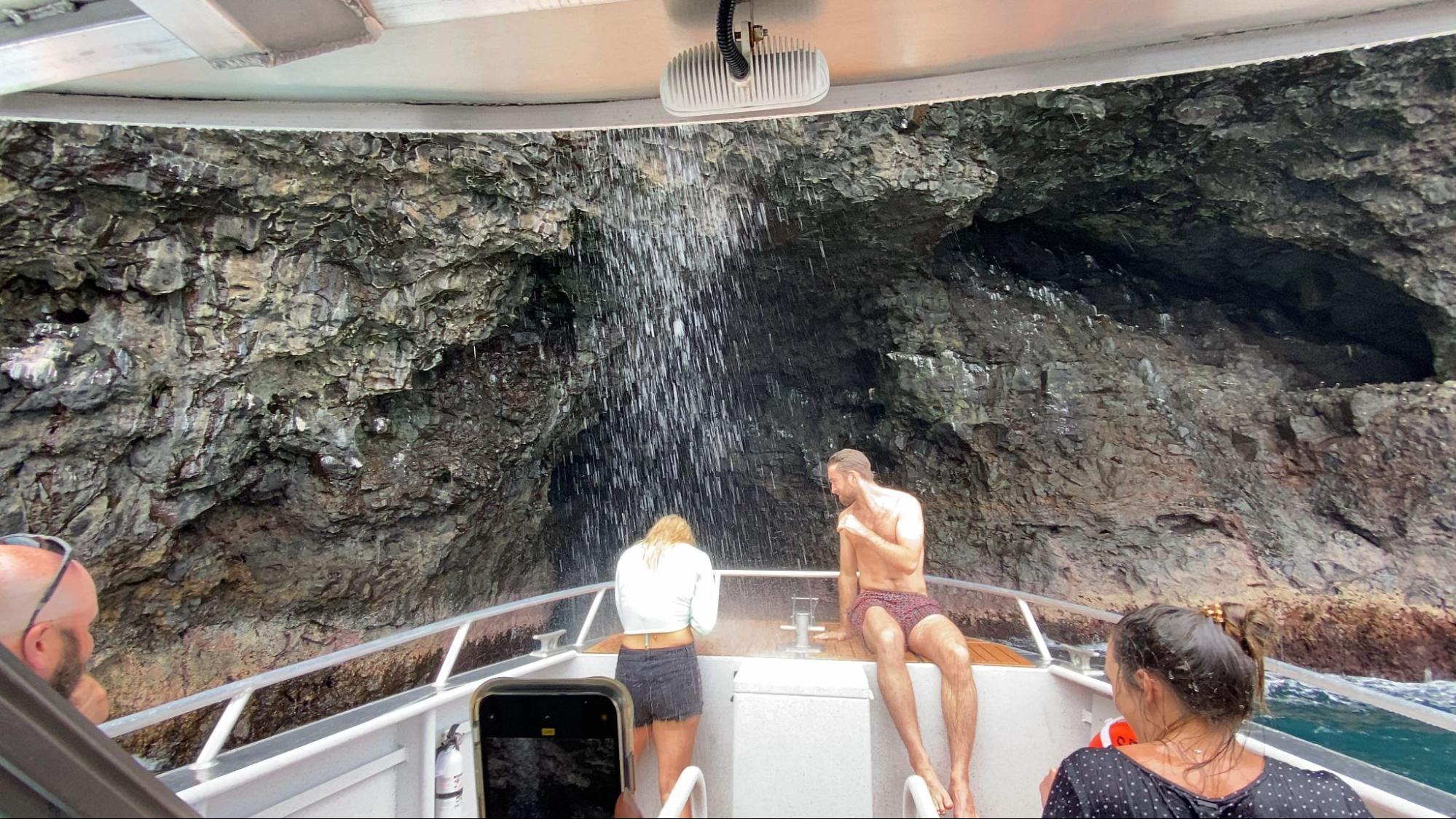
Protecting a Phone or Camera on a Moving Catamaran
A catamaran moving through open water throws spray over the deck regularly, and that spray doesn’t wait for a good photo moment to arrive. A phone in a pocket or an open bag is exposed to that spray the entire tour, not just at the snorkel stop.
A waterproof case with a floating attachment or lanyard solves both problems at once: it keeps water out, and it keeps the phone from sinking if it goes overboard. That’s the most common way guests lose one. The same logic applies to a standalone camera.
If underwater or reef photos are the goal, the Na Pali Kai III runs a 360-degree walk-around deck that gives photographers angles a fixed-rail boat doesn’t; see our guide for photographers for more on that boat specifically.
Book Your Na Pali Coast Snorkel Tour
Adult tickets are $199 on the Na Pali Kai III (ages 4 and up) and $219 on the Seiko 1, Seiko 2, Leialoha, and Makana (ages 9 and up); child tickets are $169 and $189. Call (808) 338-9980 to book or ask about gear before your tour date, or check our Na Pali Coast tours page for full details. Our hours are 7 AM to 9 PM.
Frequently Asked Questions About Snorkel Gear on a Na Pali Coast Tour
Do boat tours provide snorkel gear in Kauai?
Yes, on our tours. We equip every guest with a mask, snorkel, fins, and a flotation device before the snorkel stop, so there’s no separate rental to arrange on the island. Guests who prefer their own mask or fins are welcome to bring them instead.
Can I bring my own snorkel mask?
Yes. If you use prescription lenses or already own a mask that seals well on your face, bring it. Our crew can still help you check the fit before you get in the water.
What sunscreen should I use near the reef?
Choose a sunscreen with zinc oxide or titanium dioxide as the active ingredient rather than oxybenzone or octinoxate. Mineral filters sit on the skin instead of dissolving into the water, which matters directly above the reef habitat at our snorkel stops.
Can I bring a GoPro or waterproof camera?
Yes. A floating strap or waterproof housing is worth using, given the spray a catamaran picks up in open water. Guests focused on photos often prefer the Na Pali Kai III for its 360-degree walk-around deck.
Is a flotation device required if I can swim well?
We provide one for every guest regardless of swimming ability, and wearing it is worth it even for strong swimmers. It removes the effort of staying at the surface so you can spend the hour looking at the reef instead of treading water.