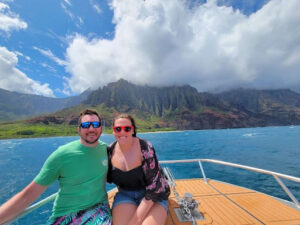
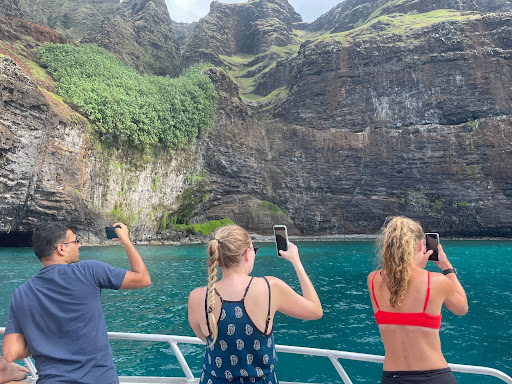
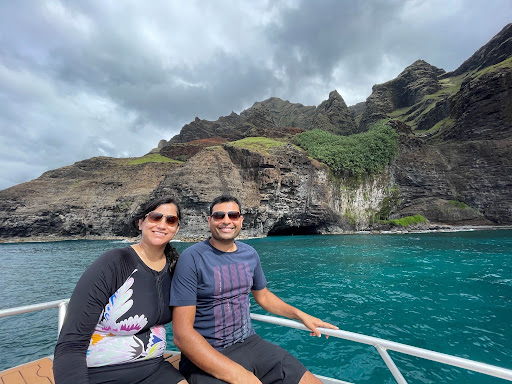
The most common clothing mistake on a Kauai boat tour is dressing for the island — warm, casual, light — without accounting for what a 4.5- to 5-hour tour on the open Pacific actually involves.
Ocean spray during transit. A full water entry at the snorkel stop. A temperature drop in the water after the sun goes down. The clothing that feels right when you leave your accommodation may not be what you want an hour into the return leg.
Makana is a Native Hawaiian family-owned operation with over 200 years on the Na Pali Coast. Our captains have run this coastline in every season, and the temperature drop on the return leg surprises guests on the Na Pali Kai III and our Seiko boats every time. This page covers what works, broken out by tour type.
Will You Get Wet on a Kauai Boat Tour?
Yes, to varying degrees depending on where you’re sitting and what the ocean is doing.
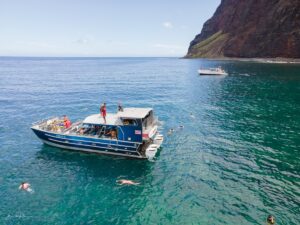
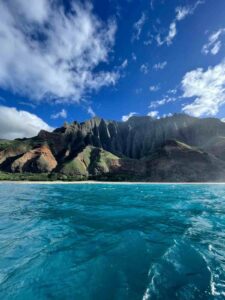
Our catamarans — the Amelia K, Na Pali Kai III, Leialoha and the Seiko 1 and Seiko 2 — move through open water to reach the Na Pali Coast cliffs. In breezy conditions, guests sitting forward on the bow get spray.
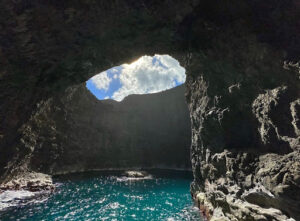
Guests sitting farther back on the stern get less. Near the cave mouths — Pirates Cave (Waiahuakua) and Rainbow Falls — the deck can pick up additional mist as the boat works close to the rock.
This is not a full soaking; it’s ocean spray from deck-level water contact as the boat moves through chop. Quick-dry fabrics handle this better than cotton.
On a calm morning departure, the outbound leg may be nearly dry. On an afternoon with building trade winds, the deck gets more spray. Plan for the possibility, not the worst case.
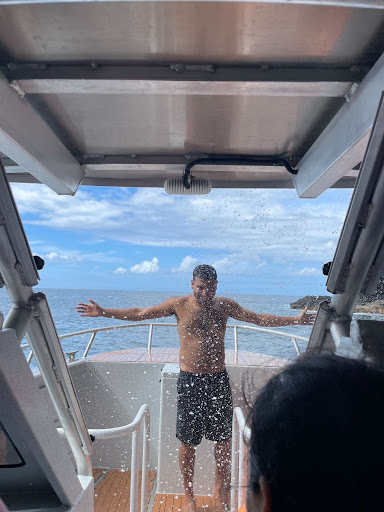
Snorkel Stop — Planning for a Full Water Entry
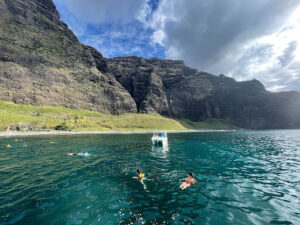
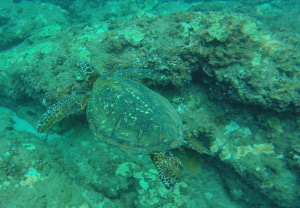
On a morning snorkeling tour, there is a snorkel stop of approximately one hour. Everyone who enters the water is fully wet. Plan for this on your outbound clothing: wear swimwear underneath, not as an afterthought to pack in a bag. Bring a towel.
What to Wear for the Morning Snorkeling Tour
Swimwear as a Base Layer
Wear your swimsuit under your clothes from departure. The snorkel stop comes after the coastline portion of the tour — by the time you reach the snorkel site, you’ve spent time on deck in sun and spray, and stripping down to swimwear is more comfortable if you haven’t been sitting in it for two hours.
One-piece swimsuits stay in place better during snorkeling than two-piece options with separate ties. Board shorts over a swimsuit work well for the deck portion before the snorkel stop.
Cover-Up, Rash Guard, or Both
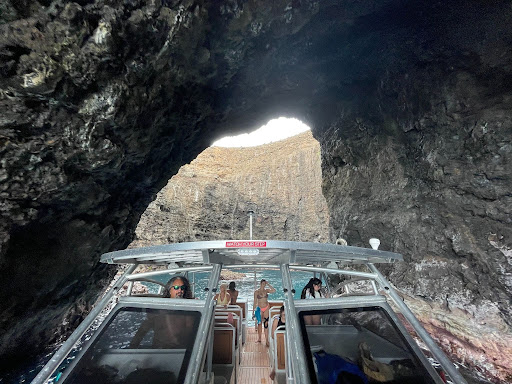
A rash guard over your swimsuit does two things: it provides UV protection during the transit and cliff portion of the tour, and it dries quickly after the snorkel stop so the return leg isn’t cold. A cotton T-shirt does neither — it provides less sun protection, absorbs water, and stays damp for the return.
A rash guard and board shorts work for the full tour — deck portion, snorkel stop, and return — without needing to change.
A lightweight cover-up or sarong is fine for guests who prefer to stay dry and are not planning to snorkel. If there’s any chance you’ll enter the water, wear swimwear underneath from the start.
Even on a sunset tour without a snorkel stop, wear a swimsuit underneath or have one accessible. Spray near the cave mouths can be enough to warrant it.
The Warm Layer Problem After Sunset
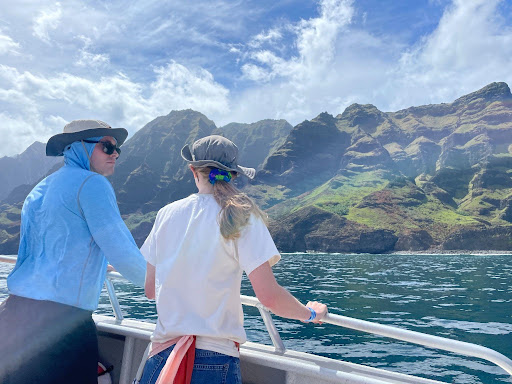
Temperatures on the water drop noticeably after sunset. Temperatures on the water drop noticeably after sunset — enough that a T-shirt alone leaves most guests cold by the time the boat reaches Kikiaola Harbor.
The combination of wind from the boat’s movement, moisture from earlier spray, and the cooling that follows sunset makes the return leg meaningfully colder than the outbound leg felt.
Bring a sweatshirt, a fleece, or a light jacket. Pack it in a bag and leave it accessible — you won’t want it during the golden-hour portion of the cruise, but you will want it on the way back. On the Na Pali Kai III, freshwater showers are available on return, but no amount of washing down covers for missing a warm layer. This is not optional advice for summer; it is consistent.
Footwear: What Works on a Catamaran Deck
Our catamarans feature a specialized soft-deck surface designed for traction and passenger safety. To maintain this comfort and the deck’s integrity, we require all guests to remove their footwear before boarding. This ensures a more stable, comfortable experience for your feet while navigating around the vessel.
What to Leave Behind
Large beach bags. Storage space on the boat is limited. A small dry bag or a backpack that can be tucked under a seat is practical. A full-sized wheeled suitcase bag is not.
No aerosol sunscreen. We require guests to apply reef-safe lotion before boarding and to only use lotion-based mineral sunscreens for reapplication on the deck. Aerosol sprays are easily carried by the wind and impact the comfort of other passengers.
Formal attire. There is no portion of the tour that calls for formal clothing, and the Pacific will quickly remind you that this is a maritime excursion. Dress as though you are headed to the beach with a towel.